Spanish Citizenship by Descent for Americans (2026): Routes and Reality
A Spanish passport is an EU passport. For Americans with Spanish roots there are four real routes, one closed one that guides still cite, and a dual-nationality question that trips people up. Here is what actually qualifies in 2026, assessed honestly.
Can Americans Get Spanish Citizenship by Descent?
Spanish citizenship gives you and your children an EU passport, the right to live and work anywhere in the European Union, and a status that does not depend on visa renewals. The catch is that Spanish nationality law is precise about who qualifies and how you prove it. Because parts of the law open and close on fixed deadlines, a route that was open last year may be shut this year, so the first step is always to confirm current eligibility rather than rely on an old article. As with all nationality matters, verify specifics against official sources such as the BOE and the Ministry of Justice before acting.
Route 1: A Spanish Parent (Citizenship by Origin)
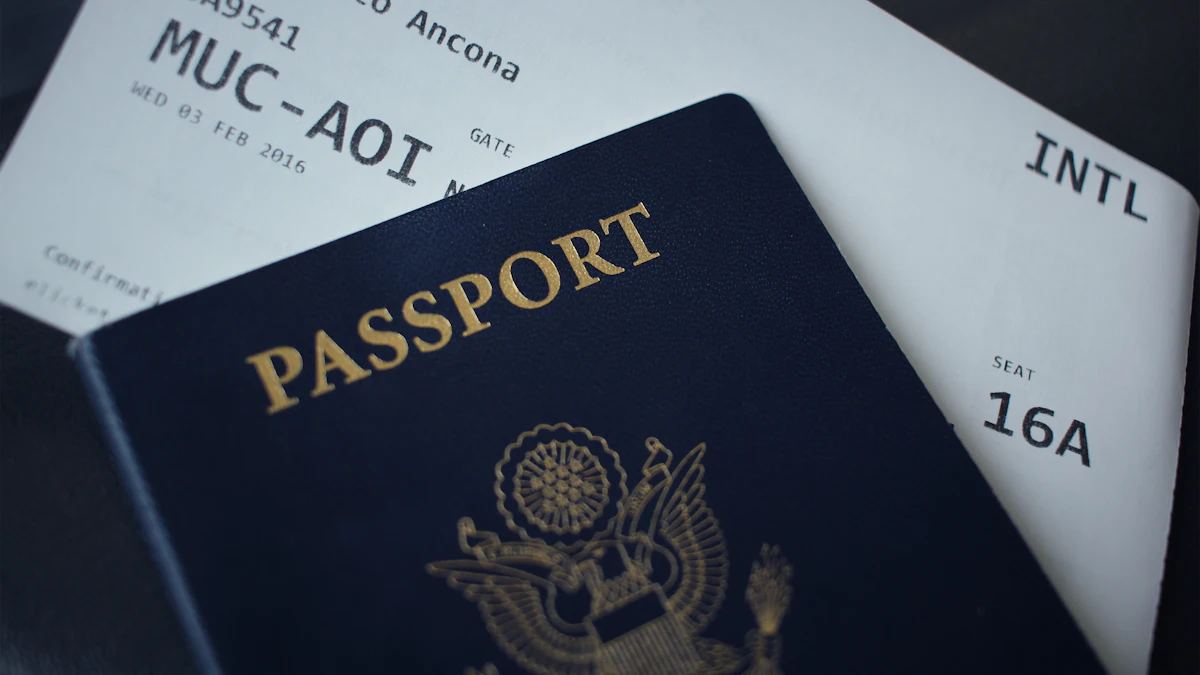
If one of your parents was a Spanish citizen at the time of your birth, you generally hold Spanish citizenship by origin, whether or not it was ever registered. This is the cleanest route: it does not require living in Spain, it does not require language exams, and it usually does not force you to renounce your US citizenship. The work is documentary, proving your parent's Spanish nationality and the link to you, then registering your own birth with the Spanish Civil Registry, often through a consulate.
Route 2: The Democratic Memory Law (Grandparents)
The Democratic Memory Law (Ley de Memoria Democrática, 2022), widely called the Ley de Nietos or grandchildren law, opened Spanish nationality to many descendants of Spaniards who emigrated or lost their nationality, including grandchildren and, in defined cases, great-grandchildren. It was a major opportunity for Americans of Spanish descent. Crucially, it operated through a fixed application window that was opened and then extended for a set period. Whether you can still file under it depends entirely on the current status of that window, which is why a descent claim through a grandparent must start with a check of the law as it stands today, not as it stood when a blog was written.
Route 3: Citizenship by Marriage
Marriage to a Spanish citizen reduces the residency requirement to one year of legal residence in Spain, provided the marriage is registered and you live together. You still complete the naturalization process, which for most applicants includes the DELE A2 Spanish exam and the CCSE culture and constitution test. This is a common path for Americans who move to Spain first, often on a Non-Lucrative Visa or Digital Nomad Visa, and marry or are already married to a Spanish national.
Route 4: Citizenship by Residency
Without a qualifying ancestor or spouse, the route is naturalization by residency. The general requirement is ten years of continuous legal residence. It falls to two years for nationals of Ibero-American countries, Andorra, the Philippines, Equatorial Guinea, and Portugal, and to one year in several family situations. Americans without one of those ties generally face the ten-year rule, which is why a well-chosen visa and clean, unbroken residency from day one matter so much. Our NIE, TIE and empadronamiento service and the visa pages set up exactly that foundation.
The Sephardic Route Is Closed
Many older guides still describe a special path for Sephardic Jews of Spanish origin to naturalize without living in Spain. That law, passed in 2015, expired in October 2019 and is no longer available. Descendants of Sephardic Jews now use the ordinary routes above. Beware advice that treats this route as open; it is not.
The Dual Nationality Question
Whether you keep your US passport depends on the route. Citizenship by origin, such as through a Spanish parent, generally does not require giving up another nationality. Naturalization by residency formally requires renouncing your prior nationality in the oath, with an exception for nationals of Ibero-American countries and a few others. Spain and the United States treat this differently, and how the renunciation is applied in practice is a technical point that should be reviewed for your specific case rather than assumed. It is one of the most common areas where Americans get wrong information.
Documents You Will Need
A descent claim rises or falls on documents. You typically need the Spanish birth or nationality record of your ancestor, the full chain of birth and marriage certificates connecting each generation to you, and your own civil records. Foreign documents must be apostilled and sworn-translated into Spanish. Gaps, name mismatches, and missing records are the usual obstacles, and fixing them is much of the work. Our apostille guidance and sworn translation services handle the US-side paperwork.
A Realistic Timeline
Citizenship is not fast. Assembling and legalizing documents takes months, and the authorities then review the file, which can take a year or more depending on the route and backlog. Origin and Democratic Memory claims turn on evidence rather than waiting out a residency clock, while residency-based naturalization is measured in years by definition. A clear assessment at the start prevents wasted effort on a route you do not qualify for.
How We Handle a Citizenship Claim
As a Valencia colegiada gestora administrativa, Elena starts by assessing which route, if any, you actually qualify for, and confirms the current status of any time-limited law before you spend on documents. From there she maps the documentary chain, coordinates the apostilles and sworn translations on the US side, prepares the exams where required, and files the application with the correct authority. The goal is an honest answer first, then a claim that is complete and correctly filed.
Frequently Asked Questions
Related reading
Talk to Elena
Message us on WhatsApp for a real plan
Do you qualify for a Spanish passport?
Message Elena on WhatsApp for an honest assessment of your route, a document checklist, and the current status of the law that applies to your family.