Cost of Living in Spain vs USA (2026): Real Numbers
Here is what living in Spain actually costs an American in 2026, with real numbers for rent, groceries, healthcare, dining, and utilities across six cities, plus honest budgets for $2K to $8K per month. All figures are illustrative estimates for 2026.
Cost of Living in Spain 2026: The Short Answer
The headline is simple: US salaries are higher, but Spanish daily life is cheaper, and for Americans who keep US-level income while living on Spanish-level costs, the gap is the whole appeal. The savings concentrate in three places, housing, food, and medical care, which also happen to be the categories that dominate a US budget.
The rest of this guide breaks the numbers down category by category and city by city. Every figure is an indicative 2026 estimate, not a quote, and prices move with inflation, season, and neighborhood. To model your own visa income threshold against these costs, use the income requirement calculator.
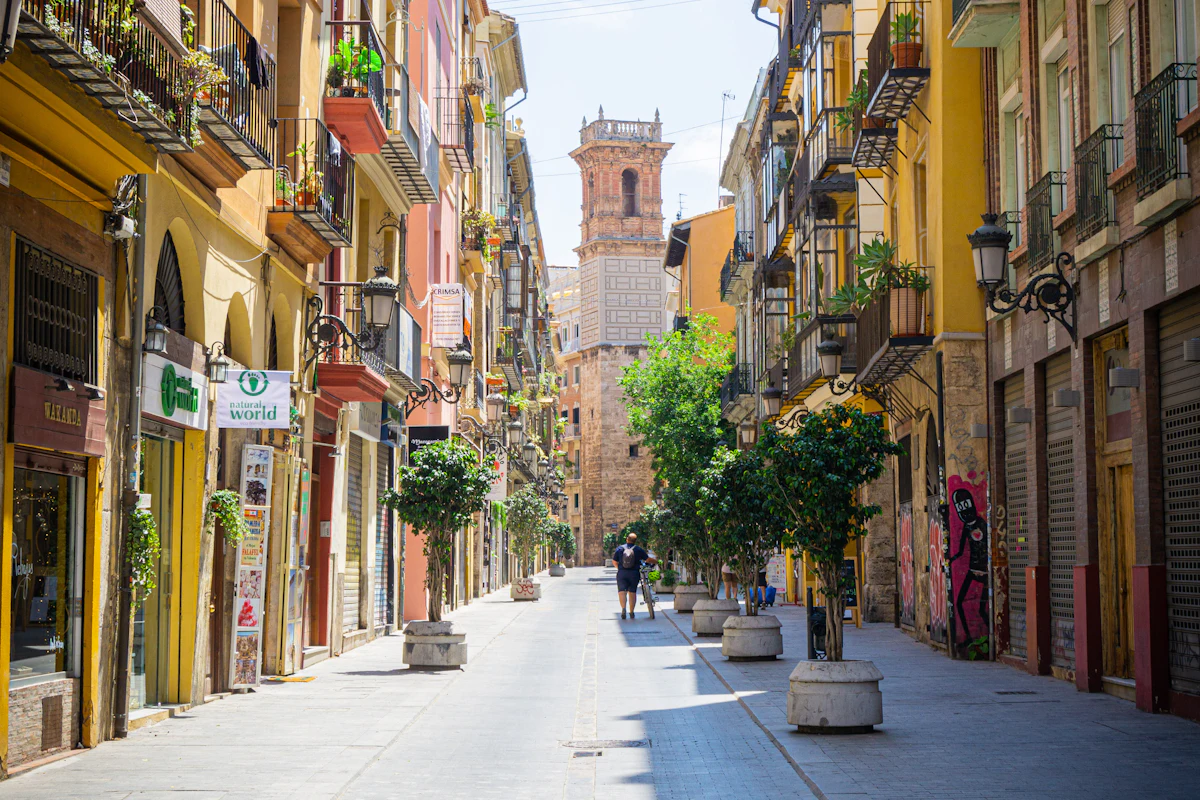
Rent Prices by City: Valencia, Madrid, Barcelona, Malaga, Seville, San Sebastian

Rent is where Americans feel the biggest difference, and it varies more by city than any other category. The table below shows indicative monthly rent for a central one-bedroom and a three-bedroom apartment, with approximate USD equivalents. Treat these as illustrative estimates for 2026, not listings.
| 1-bedroom (EUR / USD) | 3-bedroom (EUR / USD) | |
|---|---|---|
| Valencia | 900 to 1,200 / 970 to 1,300 | 1,400 to 1,900 / 1,500 to 2,050 |
| Seville | 800 to 1,100 / 860 to 1,190 | 1,300 to 1,700 / 1,400 to 1,830 |
| Malaga | 950 to 1,300 / 1,020 to 1,400 | 1,500 to 2,100 / 1,620 to 2,270 |
| Madrid | 1,200 to 1,700 / 1,300 to 1,830 | 2,000 to 3,000 / 2,160 to 3,240 |
| Barcelona | 1,200 to 1,800 / 1,300 to 1,940 | 2,100 to 3,200 / 2,270 to 3,460 |
| San Sebastian | 1,300 to 1,900 / 1,400 to 2,050 | 2,200 to 3,300 / 2,380 to 3,560 |
For context, a central one-bedroom in New York, San Francisco, or Boston often exceeds every figure in this table, sometimes by a wide margin. Even Spain's priciest cities, Barcelona and San Sebastian, tend to land below prime US-metro rents. The affordable trio, Valencia, Seville, and Malaga, is where a US remote income stretches furthest.
Rents have risen across Spain in recent years, especially in Madrid, Barcelona, and the coastal hotspots, so verify current listings before budgeting. Most newcomers rent for the first year before deciding where to settle. For a deeper look at one city, see living in Valencia.
Neighborhood choice moves the number as much as the city does. Central, walkable districts command a premium, while a metro stop or two out can cut rent noticeably for a similar apartment. Furnished long-term rentals cost more than unfurnished, and short-term or expat-targeted listings carry the steepest prices, so a local search often beats the English-language portals. Expect to show proof of income and pay a deposit, and budget for a one-time agency fee in some markets. Buying rather than renting is a separate calculation, and since the Golden Visa route ended in 2025, property purchase no longer carries any residency benefit.
Groceries: Mercadona vs a US Grocery Run
Groceries are consistently cheaper in Spain than in the US, particularly fresh produce, bread, olive oil, and wine. Mercadona, Spain's largest supermarket chain, is the everyday benchmark, and local markets add fresh fish, meat, and vegetables at strong prices.
A single person shopping mainly at Mercadona might spend around 200 to 300 euros per month, and a couple roughly 350 to 500. A bottle of drinkable local wine can cost a few euros, a loaf of fresh bread under a euro, and seasonal produce is inexpensive. Where costs climb is imported and specialty American products, peanut butter, certain snacks, and large-format packaged goods, which are pricier and less common than at home.
Compared with a Whole Foods or comparable US grocery run, the same basket of staples in Spain typically costs less, and the quality of fresh food is a frequent surprise for newcomers. These are illustrative 2026 estimates and depend on diet and city.
Shopping patterns also shift the total. Many residents split their week between a discount supermarket like Mercadona or Lidl for pantry staples and a neighborhood market or fruteria for fresh produce, fish, and meat, which is often both cheaper and better than a single big-box run. Seasonal eating is the norm, and buying what is in season keeps the bill down further. Alcohol is another visible gap: local wine, beer, and vermouth cost a fraction of US prices, while imported spirits and craft products carry a premium.
Restaurants and the Menu del Dia

Eating out in Spain costs far less than in the US for comparable quality, and the menu del dia (a multi-course, fixed-price weekday lunch) is the single best value in Spanish dining. It commonly includes a starter, a main, dessert or coffee, and a drink.
A menu del dia typically runs about 12 to 18 euros. A casual dinner for two with wine is often 40 to 70 euros total, and a coffee at a cafe is usually well under 2 euros. Tipping is modest and not obligatory, which further lowers the real cost against US norms, where tax and a 20 percent tip inflate the bill.
The practical effect is that eating out regularly is realistic on a middle budget in Spain in a way it often is not in a major US city. Figures are indicative for 2026 and vary by city and venue.
Utilities: Electricity, Gas, Water, Internet
Utilities in Spain are a mixed picture: electricity can be relatively expensive, while water and internet are cheap. Summer air conditioning and winter heating drive the biggest seasonal swings in the bill.
A typical apartment might spend roughly 100 to 200 euros per month across electricity, gas, water, and internet combined, with electricity the largest and most variable component. Fiber internet is widespread and inexpensive, often around 30 to 40 euros per month for fast service, frequently bundled with a mobile plan. Water is modest, and many buildings include some community costs in the rent.
Newcomers are often surprised that electricity, not internet or water, is the utility to watch, especially in the hot southern cities in summer. These are illustrative 2026 estimates.
Mobile phone service is another pleasant surprise. Generous data plans commonly cost around 10 to 20 euros per month, and providers frequently bundle mobile with home fiber to lower the combined bill. Setting up utilities usually requires a Spanish bank account and your NIE, and most bills are paid by direct debit (domiciliacion), which is why arranging banking early, as covered in our relocation guide, smooths the first weeks. Building community fees (comunidad) may be included in rent or billed separately, so confirm what your lease covers before signing.
Healthcare Costs (Public vs Private Insurance)
Healthcare is one of the largest structural savings for Americans in Spain, whether public or private. Spain's public system is well regarded, and private care is affordable by US standards.
On income-based visas you typically start with compliant private health insurance, which often costs about 80 to 200 euros per month per person depending on age and coverage, with no copays as the visa requires. Once you contribute to Spanish social security through work, or qualify through residency, you can access the public system. Many residents keep a private plan anyway for shorter waits and English-speaking doctors, and even then the combined cost is a fraction of typical US premiums, deductibles, and out-of-pocket bills.
Out-of-pocket medical and dental costs, prescriptions, a specialist visit, a dental cleaning, are also markedly lower than US list prices. For how coverage works in practice, see healthcare in Spain. These are illustrative 2026 estimates.
Transportation: Public Transit, Car Ownership, Fuel
In Spain's major cities, most people do not need a car, and public transport is cheap and extensive. This alone removes a large US budget line for many newcomers.
A monthly public-transport pass in a major city commonly costs around 20 to 60 euros depending on zones and age, and cities like Valencia, Madrid, and Barcelona are walkable and cyclable. Long-distance rail connects the country efficiently. Where costs rise is car ownership: fuel is significantly more expensive than in the US per gallon equivalent, and insurance, parking, and the ITV vehicle inspection add up. For that reason many expats go car-free in the city and rent a car for trips.
If you settle in a smaller town or rural area, a car becomes more useful, and the calculation shifts. Note that a US license eventually must be converted, and the US and Spain have no direct exchange. Figures are indicative for 2026.
Intercity travel is a category where Spain quietly beats the US. A dense high-speed rail network links the major cities quickly, and booking ahead brings fares down, so weekend trips add less to the budget than they would with US domestic flights or long drives. Budget airlines connect Spain to the rest of Europe cheaply as well, which is part of the lifestyle appeal for Americans. Ride-hailing and taxis are available in the cities and cost less than comparable US rides, though public transport usually wins on price for daily use.
Education Costs for Expat Families
Education costs less in Spain than the US private-school equivalent, with several tiers to choose from. The right fit depends on language, budget, and how long you plan to stay.
- Public schools: free, taught in Spanish and often the regional language. Best for families committed to full integration.
- Concertado (semi-private): subsidized private schools at modest tuition, a common middle path.
- International and private schools: English-language or bilingual curricula, typically about 6,000 to 15,000 euros per year per child depending on city and school.
Even the international-school tier generally costs well below comparable US private-school tuition, and it is a major draw for relocating families. Availability and waitlists vary by city, so plan enrollment early. These are illustrative 2026 estimates.
Childcare and Domestic Help
Childcare and domestic help are more affordable in Spain than in most of the US, which reshapes family budgets. The savings here are real but vary by city.
Public and subsidized nurseries (guarderias) are relatively inexpensive, often a few hundred euros per month, while private nurseries cost more. In-home help, such as a cleaner or occasional childcare, is also more accessible than at comparable US rates, and many families use it in a way they might not have at home. As always, budget by your actual city and needs, since Madrid and Barcelona sit above Valencia or Seville. These are illustrative 2026 estimates.
Living Well on $2K, $3K, $5K, and $8K per Month
The same budget buys very different lives depending on the city and household. The table translates four monthly budgets into what they realistically cover in Spain in 2026. These are illustrative estimates, and a single person stretches a budget much further than a family.
| Best fit | Realistic lifestyle | |
|---|---|---|
| $2,000 / month | Single, affordable city | Modest one-bedroom in Valencia or Seville, cooking at home, occasional dining out, private insurance |
| $3,000 / month | Single or frugal couple | Comfortable central apartment, regular menu del dia, transit, insurance, some savings |
| $5,000 / month | Couple or small family | Larger apartment in most cities, frequent dining out, travel, one international-school child feasible in cheaper cities |
| $8,000 / month | Family, any city | Spacious home in Madrid or Barcelona, international school, car, travel, comfortable margin |
The pattern is that even the lower budgets support a good life in the affordable cities, while the higher budgets open up Madrid, Barcelona, San Sebastian, and international schooling. For Americans keeping US remote income, the middle budgets often feel like the upper budgets did back home.
One caution on these budgets: they describe lifestyle cost, not your visa income requirement, which is a separate legal threshold. The Digital Nomad Visa and the Non-Lucrative Visa each set a minimum monthly income you must document to qualify, regardless of how frugally you plan to live. Model both numbers side by side, what your visa requires and what your chosen city actually costs, so the two line up before you commit. These budgets are illustrative estimates for 2026 and assume a single household without large debt payments.
Cost of Living: Spain vs Portugal vs Italy
Spain, Portugal, and Italy are the three most common Southern European destinations for Americans, and their costs are broadly comparable, with the differences showing up city-to-city rather than country-to-country. Country averages hide more than they reveal.
| Spain | Portugal | Italy | |
|---|---|---|---|
| Rent in top expat city | Moderate (Valencia low, Barcelona high) | Risen sharply (Lisbon, Porto) | Wide range (Milan high, south low) |
| Groceries and dining | Low to moderate | Low to moderate | Low to moderate |
| Healthcare quality and cost | Strong public system, cheap private | Good system, growing demand | Strong public system, regional variation |
| Remote-work visa for Americans | Digital Nomad Visa | D8 digital nomad visa | Digital nomad visa (newer) |
In practice, Spain sits competitively in the middle: Portugal's Lisbon and Porto have become expensive as demand surged, Italy varies enormously between the affordable south and the costly north, and Spain offers a strong balance of cost, healthcare, and infrastructure with cities like Valencia at the affordable end. The better question is not which country but which city, on your budget and visa. These are illustrative estimates for 2026.
Cost is only one axis. For American families the practical factors, availability of English-speaking international schools, direct flights home, healthcare quality, and the local expat community, often matter as much as the monthly budget, and Spain scores well across all four. Tax treatment differs by country too, and the US-Spain tax treaty plus regimes like Beckham Law shape the real cost of a move for higher earners. Weigh the total picture, not just rent, when you compare destinations, and see our move to Spain master guide for how the pieces fit together.
Frequently Asked Questions
Related reading
Talk to Elena
Message us on WhatsApp for a real plan
Ready to make the numbers work in Spain?
Message Elena on WhatsApp and leave with a city recommendation, a realistic monthly budget, and the visa income plan to match it.